Basement Flooding Cleanup in Cherry Hills Village, CO
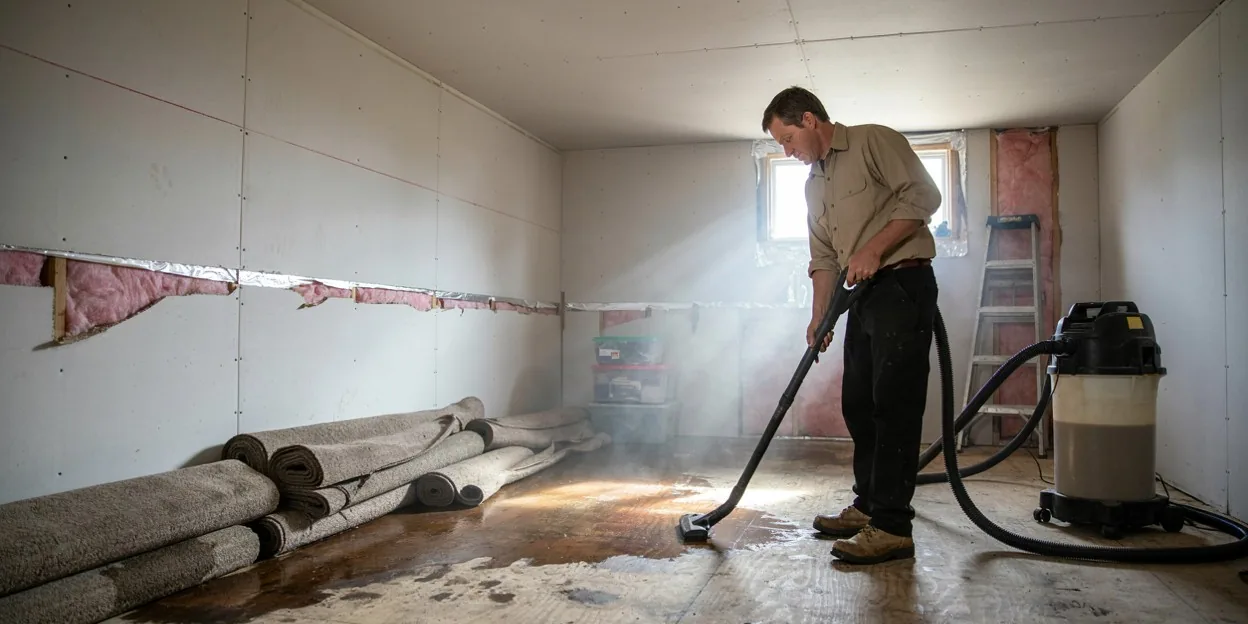
The basement in a Cherry Hills Village house is not storage. It is a theater, a wine room, a guest suite, and a gym, finished with the same stone and millwork as the kitchen upstairs. So when the carpet along the north wall goes dark after a week of June thunderstorms, or the floor drain backs up during a Memorial Day downpour, the loss is not a few boxes. This site puts you through by phone to an independent local provider who cleans up flooded basements in Cherry Hills Village and across Arapahoe County.
Sorting ground water from pipe water before the pump starts
The crew's first job in a wet basement is naming the source, because ground water and pipe water are two different jobs. They check the meter and the main, look at the water heater and the boiler, and then go to the base of the wall on the side of the house that faces the canal or the creek. Water that came through the cold joint between slab and footing leaves a line along the whole wall, not a puddle under one fixture. Water from a floor drain smells, and it changes what can be saved.
Then the standing water comes off the slab, the carpet pad comes up, and every wall on the level gets metered at the base. A dry reading from a wall upstairs sets the target the basement has to reach.
Move what you can, photograph the rest, leave the carpet alone
Get anything with legs, anything in a box, and anything you care about up off the floor and out of the wet rooms. Take photos of the water line on the walls, the boxes, and the furniture before anything moves to the garage. Do not pull the carpet or cut the drywall yourself; you spread the water and destroy the record. Do not run the furnace blower to dry the space. If the water came up through the floor drain, keep children and pets upstairs. Then call and describe what you see.
The slab and the studs stay; the pad and the bottom foot of drywall usually go
A basement slab dries once the water is off it and air moves across it. The framing behind the finished walls usually dries in place if the crew reaches it within a few days. Carpet pad that sat in water comes out, and so does the bottom foot or two of drywall that wicked it, along with the insulation behind it. Carpet itself sometimes dries once the pad is gone. Stone and tile floors on the slab are metered on their own and often stay. A wine room with a wood-lined ceiling and a theater with acoustic wall panels get a separate plan, because those finishes are worth the effort of trying.
After the wet material is out, structural drying runs equipment against daily readings until the numbers match the dry wall upstairs. If the water first had to be pumped off a slab under two inches of standing water, water extraction is the first hour of the same job.
Why the ground under Cherry Hills Village fills up
The High Line Canal was dug in 1883 to move irrigation water from the South Platte in Waterton Canyon out to the plains, and it still runs through the middle of Cherry Hills Village from April into October. It is an unlined ditch, and Denver Water says it seeps 60 to 80 percent of what it carries into the soil beside it. Little Dry Creek crosses the city too, on its way from Centennial to the Platte in Englewood. Houses within a few hundred yards of either one sit in ground that stays wet all summer, and a basement finished in the 1990s may take its first water in a spring when the canal runs full and a storm stalls overhead.
The Mile High Flood District's flood warning program watches the creeks across the metro with rain and stream gauges, and its maps show which lots along Little Dry Creek sit in the regulatory floodplain. That matters when a rebuild changes grading or adds a discharge line near the creek.
Ground water and floor-drain backups are often excluded from a homeowner policy unless you carry a water backup endorsement, and this site cannot say what yours does. Have the crew record the source, the first readings, and the photos so the file is complete whichever way the claim goes.
What to say when the basement is the wet room
Say whether the basement is finished, which wall or corner is wet, whether the water came from a pipe or the ground, and whether the floor drain was involved. Mention a wine room, hardwood, or stone if you have them. Call (720) 807-5901.