Burst Pipe Water Damage in Cherry Hills Village, CO
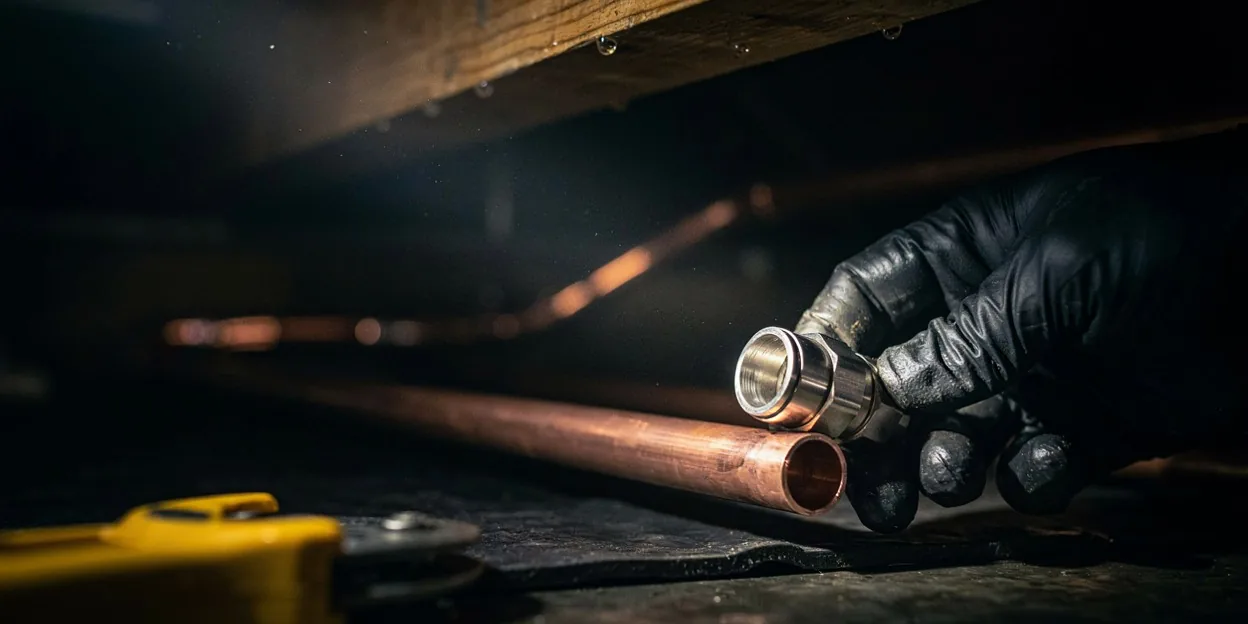
The 1962 ranch you renovated still heats with the original boiler, and the copper line to the baseboard in the master bedroom let go behind the wall at three in the morning. By the time the pressure alarm on the boiler woke you, the hall carpet was wet, the closet floor was wet, and the ceiling of the basement family room directly below had a bulge in it. This site puts you through by phone to an independent local provider who cleans up after burst pipes in Cherry Hills Village and across Arapahoe County.
Tracing the water from the split to the lowest wet room
A pipe that lets go on an upper level does not wet one room. The crew starts at the split and works down: the floor around it, the ceiling of the room below, the wall cavities the water used to get there, and the basement under all of it. They meter each level separately, because water that ran for hours reaches places the eye does not. A boiler line is checked differently from a supply line, since the water in a heating loop has been circulating through iron and copper for decades and can stain and smell.
Then the standing water comes off the floors, the wet ceiling drywall that is sagging comes down before it falls, and the equipment goes in where the readings put it.
Kill the boiler, close the main, stay out from under the bulge
If the leak is on a heating line, shut the boiler off at its switch and close the feed valve to it; if it is a supply line, close the main on the house side of the meter. Turn off the breaker for any room where water is dripping from a ceiling fixture. Do not stand under a sagging ceiling and do not poke it; put a bucket under the drip and leave the room. Move what you can off wet floors, photograph everything, and call. The plumber or boiler technician repairs the line; the cleanup crew dries the house.
What comes down, what dries in place, and what waits for the readings
Ceiling drywall that has sagged or bubbled comes down; the framing above it almost always dries in place. Wet fiberglass insulation between floors comes out. Wall drywall that took water from above is metered and often dries in place if it did not stand in water at the bottom. Hardwood on the main floor is metered board by board and dried with mats where the readings allow. Carpet in the basement family room comes up, the pad goes, and the carpet itself often returns.
Once the wet material is out, structural drying runs equipment on every level the water reached until the readings match a dry part of the house. If the split was in a supply line that froze in a cold snap rather than a heating loop, the job is handled as frozen pipe cleanup, with the same top-down approach. If the standing water on the main floor was deep, water extraction is the first hour.
Why Cherry Hills houses put pipes above finished space
The brick ranches built on these acre lots in the 1950s and 1960s were often heated with boilers, hot-water baseboards, and in some cases radiant tubing in the slab or ceiling, and many still are, with a newer boiler on the original loops. Those lines run through walls and ceilings above rooms that have since been finished to a high standard. The custom two-stories of the 1980s through 2020s stack bathrooms and laundry rooms over living space and put a finished basement under all of it, so a second-floor supply line that lets go has two finished levels to fall through.
Copper supply lines from the 1960s have pinhole leaks at sixty years old, and the Denver area's hard, mineral-heavy water does not help. A soft spot on a ceiling that has never leaked before is worth a call before it opens.
A burst supply line or a failed heating fitting is usually treated as sudden damage under a homeowner policy. What the policy pays to rebuild is a separate question from what it pays to dry, and this site cannot answer either. Have the crew record where the water started, when it was found, and the readings on every level.
What to say about a split upstairs
Say where the split is, whether it was a supply line or a heating line, whether the water is off, and how many levels are wet. Mention a sagging ceiling or a finished basement below. Call (720) 807-5901.