Roof Leak Water Damage in Cherry Hills Village, CO
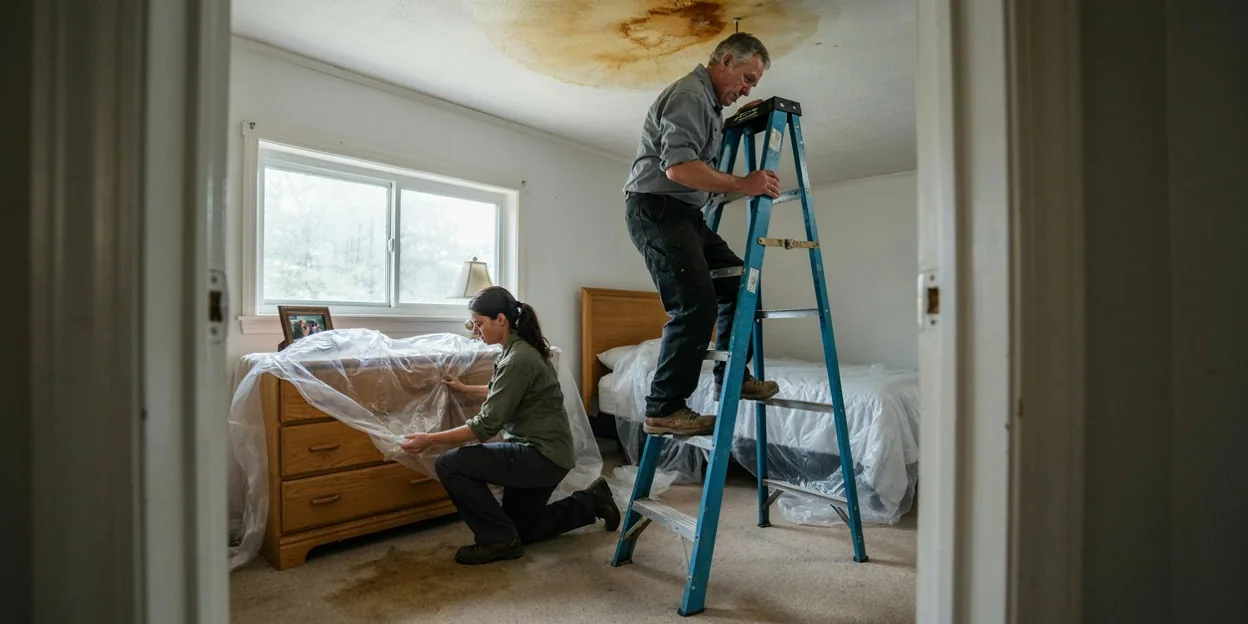
The hail came through at five on a June afternoon, twenty minutes of stones the size of golf balls, and by the time the sun came back out the gutters were full of shredded leaves and the lawn was white. That night the ceiling in the upstairs bedroom on the west side started to drip. By morning there was a brown ring the size of a dinner plate and the paint was bubbling. This site puts you through by phone to an independent local provider who dries the inside of the house after a roof leak in Cherry Hills Village and across Arapahoe County.
Following the water from the shingles to the ceiling stain
The stain on the ceiling is where the water came out, not where it came in. The crew goes into the attic first and follows the wet insulation back to the entry point: a hail-cracked shingle, a lifted ridge cap, a flashing joint at a chimney or a dormer, or a clogged valley. Then they meter the ceiling drywall around the stain, the top plates of the walls below it, and the wall drywall the water ran down inside. Wet insulation gets pulled back so the crew can see how far the ceiling drywall is wet from above.
A roof leak in a house with a hip roof and a vaulted great room often travels a long way along the rafters before it drips, so the wet spot in the ceiling may be ten feet from the hole in the roof.
Buckets, a tarp if you can do it safely, and no ladder in the hail
Put a bucket under the drip and move furniture and rugs out from under the stain. If the ceiling is bulging, poke a small hole at the low point with a screwdriver to let the water out into the bucket rather than letting the whole panel come down. Do not go on the roof yourself, especially a wet or steep one; call a roofer for the tarp. Photograph the ceiling, the walls, and the hail on the ground and the cars. Then call. The roofer stops new water; the cleanup crew dries what already came in.
Insulation goes, the framing stays, the ceiling depends on how long it dripped
Wet fiberglass or cellulose insulation in the attic comes out, because it holds water against the ceiling drywall and the rafters. The rafters and joists almost always dry in place. Ceiling drywall that got wet once and was dried within a few days often stays; drywall that sagged or that has been dripping through three storms comes down. Wall drywall below the stain is metered and usually dries in place. Hardwood floors under a bedroom leak are metered and dried with mats where the readings allow.
After the wet insulation is out and the roof is covered, structural drying runs equipment in the attic and the rooms below until the readings match a dry part of the house. A leak that ran through two floors and into a finished basement adds a basement flooding cleanup at the bottom. If the water first pooled on a hardwood floor, water extraction is the first hour.
Why hail is the roof problem along the Front Range
The Denver metro sits in the middle of the country's hail belt, and the storms come from the foothills in the late afternoon from May into August. On May 8, 2017, a supercell dropped baseball-size hail across the west metro and caused about 2.3 billion dollars in insured losses, the costliest hailstorm in Colorado history, according to the National Weather Service in Boulder. Cherry Hills Village was east of the worst of that one, but a storm of that shape crosses the south metro every few summers, and a roof that has taken two or three of them leaks at the flashing long before it looks bad from the street.
The roofs here are large and complicated. A 1960s ranch has a low-slope roof with a lot of valleys and a chimney or two; a 2000s custom home has dormers, turrets, and slate or concrete tile that cracks under hail. Both put a lot of attic over finished space, and a wind-lifted shingle in a March chinook can leak into a bedroom wing for a week before anyone notices.
Hail and wind damage to a roof, and the interior water damage that follows, are usually covered under a homeowner policy, with a separate deductible for wind and hail on many Colorado policies. This site cannot say what yours does. Have the crew document the storm date, the entry point, and the readings in the attic and the rooms below.
Calling about a ceiling that started to drip
Say which room the stain is in, whether it is still dripping, whether a roofer has been called, and what kind of roof the house has. Mention the storm date and whether hail hit the cars. Call (720) 807-5901.