Water Extraction in Cherry Hills Village, CO
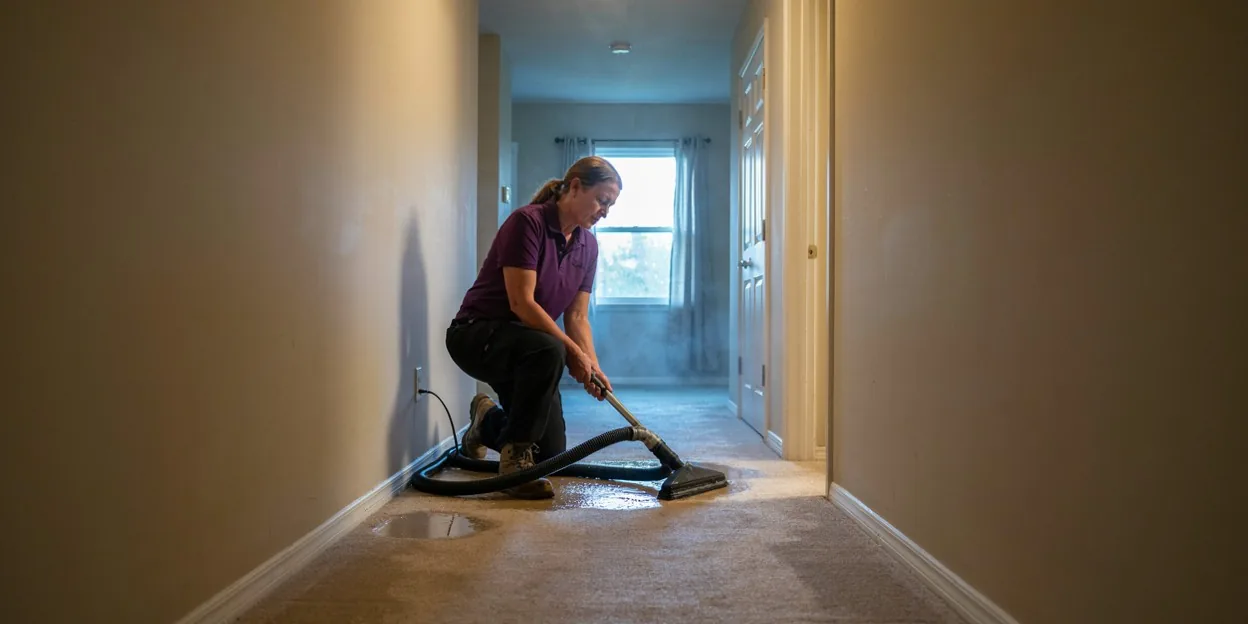
You came back from a long weekend in the mountains and the front hall has an inch of water on the oak. The supply line to the powder room toilet let go on Saturday, and it has been running for two days. The water went down the hall, under the dining room floor, and through the ceiling into the basement below. This site puts you through by phone to an independent local provider who extracts standing water from Cherry Hills Village houses and across Arapahoe County.
Getting the bulk water off the floor before it climbs the walls
Extraction is the first hour of every water job. The crew confirms the main is closed, then pulls the standing water off the floor with truck-mounted or portable extractors that move far more water than a shop vacuum. On hardwood they work fast, because oak that has been under water for two days is already cupping and every hour matters. On carpet they extract through the pile, then lift a corner to check the pad. On a slab they squeegee and vacuum until the concrete is damp instead of wet.
Then the meters come out. Every floor that took water gets read, along with the base of every wall the water touched and the ceiling of whatever room sits below. Those readings, taken before anything dries, set the map for the rest of the job.
Ten minutes of your own work before the truck arrives
Close the main if the water came from a pipe; in most Cherry Hills houses it is on the house side of the meter in the basement. Kill the breaker to any room where water is near an outlet or a floor lamp. Move rugs off the hardwood now, because a wet rug on oak leaves a stain the floor may not lose. Pick up anything on the floor you would miss and photograph what stays. Do not mop, and do not try to dry the floor with a hair dryer or a space heater. Then call.
What extraction saves, and what it only starts
Fast extraction is what gives a hardwood floor a chance. Oak pulled dry within a day or two and then dried under mats often flattens back out; oak left wet for a week usually does not. Stone and tile survive almost anything if the water comes off before it gets under them. Carpet survives when the pad goes and the carpet is dried on its own. Drywall that got wet for a few hours from the floor up is usually a candidate for drying in place; drywall that sat in water for days comes out.
Extraction does not finish the job. Wood, plaster, and framing hold water long after the surface looks dry, and structural drying is the part that takes the readings back to normal over the following days. If the water is in a finished basement, the same visit becomes a basement flooding cleanup, with the pad and the bottom of the walls handled as one job.
Why extraction in a Cherry Hills house means hardwood, stone, and a lot of square feet
The houses on these acre lots are large, and their floors are the finishes that cost the most to replace. A 1960s ranch renovated in 2010 has wide-plank oak through the main floor; a 2003 custom build has limestone in the hall and walnut in the study. Water that runs for a weekend in a 6,000-square-foot house crosses more floor than most crews see in a week, and it drops into a finished basement through every gap in the subfloor.
The Village contracts with South Metro Fire Rescue, and the crews at Station 38 on East Quincy Avenue respond to a house where water is near live electrical or a ceiling is about to come down. Call them first for that. Call us for everything after.
A supply line that let go is often treated as a sudden loss under a homeowner policy, and a house left empty for a few days is usually still covered, though some policies expect the water to have been shut off on longer absences. This site cannot say what yours does. Have the crew document when the water was found and what the first readings were.
Calling about standing water in the house
Say which floor is wet, what the floor is made of, whether the water is still running, and whether it has reached the basement. Mention when you found it and when you were last home. Call (720) 807-5901.