Water Damage Restoration in Southmoor Park, CO
Southmoor Park is the Denver neighborhood tucked between Interstate 25 and Hampden Avenue, just north of the Cherry Hills Village line, built in the 1960s and 1970s as one of the city's first neighborhoods designed around cul-de-sacs and a central park rather than a street grid. The houses are brick ranches, split-levels, and two-stories on lots larger than most of Denver's, with mature spruce and cottonwood and full basements, most of them finished in the decade after the house was built. The park at the center gives the neighborhood its name, and the light rail station at its edge gave it a second life as a commuter neighborhood after 2006.
The water pattern is the 1960s pattern: original copper reaching sixty years, boilers and baseboards in some houses, forced air in others, and a finished basement with carpet over a slab that was poured before anyone thought about drainage under it. The neighborhood sits on a slope toward the freeway, and the downhill basements take ground water in a wet spring.
This site puts Southmoor Park homeowners through by phone to an independent local water damage provider. The provider starts with a meter in the basement and works from what it says.
Southmoor Park water damage on a cul-de-sac lot
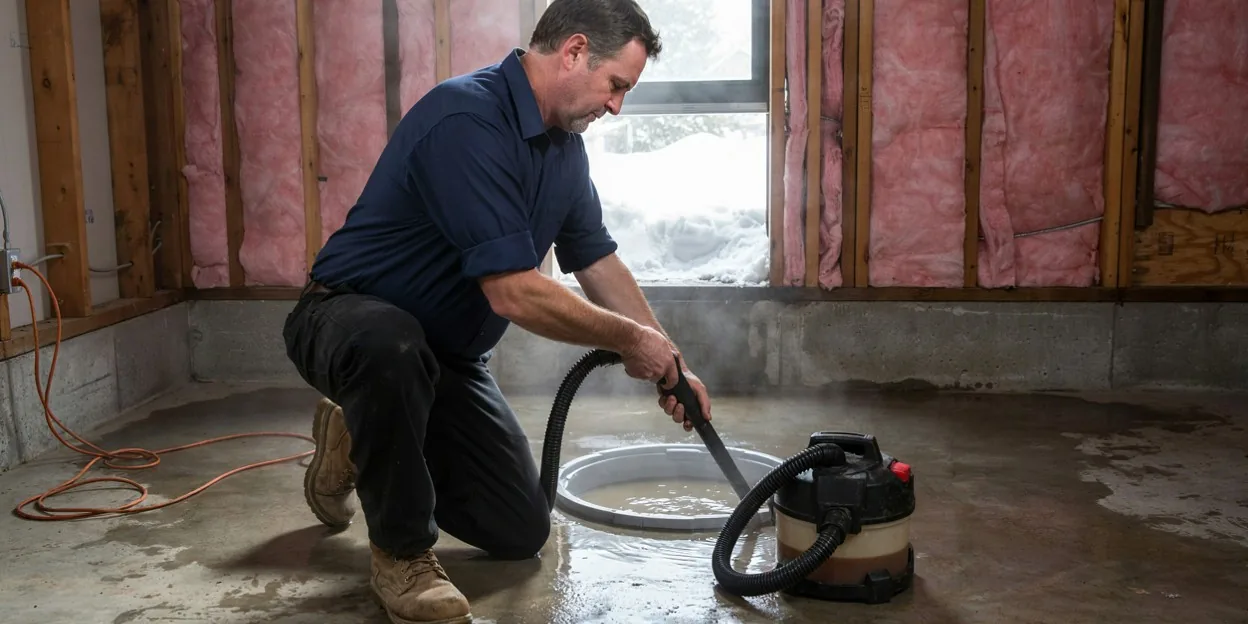
A downhill basement with damp carpet along the low wall after a week of rain is a basement flooding cleanup. A split-level whose lower level took the runoff from a burst washer hose on the level above is water extraction first. Once the wet material is out, structural drying runs equipment against daily readings until the slab and walls read dry.
The station on Monaco Parkway and the desk downtown
The neighborhood's edge is RTD's Southmoor Station on South Monaco Parkway, opened in November 2006 with nearly 800 parking spaces, and the E and H lines from there are how much of the neighborhood gets downtown. A rebuild in Southmoor Park goes through Denver's Community Planning and Development permit desk for drywall, plumbing, and electrical, and Denver Water sends the bill.
Call (720) 807-5901 and describe what is on the floor. We put you through to an independent local water damage provider serving Southmoor Park.
Services Available in Southmoor Park
Basement Flooding Cleanup
Groundwater, a failed pit pump, or a broken line in a finished Cherry Hills basement pumped out, then carpet pad, drywall, and framing metered.
Water Extraction
Standing water pulled off hardwood, tile, and basement concrete on any level of the house, with the first moisture readings taken the same visit.
Structural Drying
Air movers and dehumidifiers run against daily readings until plaster, studs, subfloor, and slab reach their dry target in a mile-high house.
Frozen Pipe Cleanup
Cleanup after a supply line, hose bib, or sprinkler backflow froze in a January cold snap and split, then drying of everything the thaw soaked.
Burst Pipe Water Damage
A failed supply line, boiler fitting, or radiant loop on an upper floor, and the ceilings, walls, and floors below it, dried from the top down.
Leak Detection
A high Denver Water bill, a warm patch on a slab, or a musty wall traced to its source before anyone opens plaster or cuts tile.
Water Heater Leak Cleanup
A tank that let go in a basement mechanical room or a garage closet, and the flooring, drywall, and storage around it dried out.
Roof Leak Water Damage
Wet attic insulation, ceilings, and walls dried after a summer hailstorm or a wind-lifted shingle let water into the house.